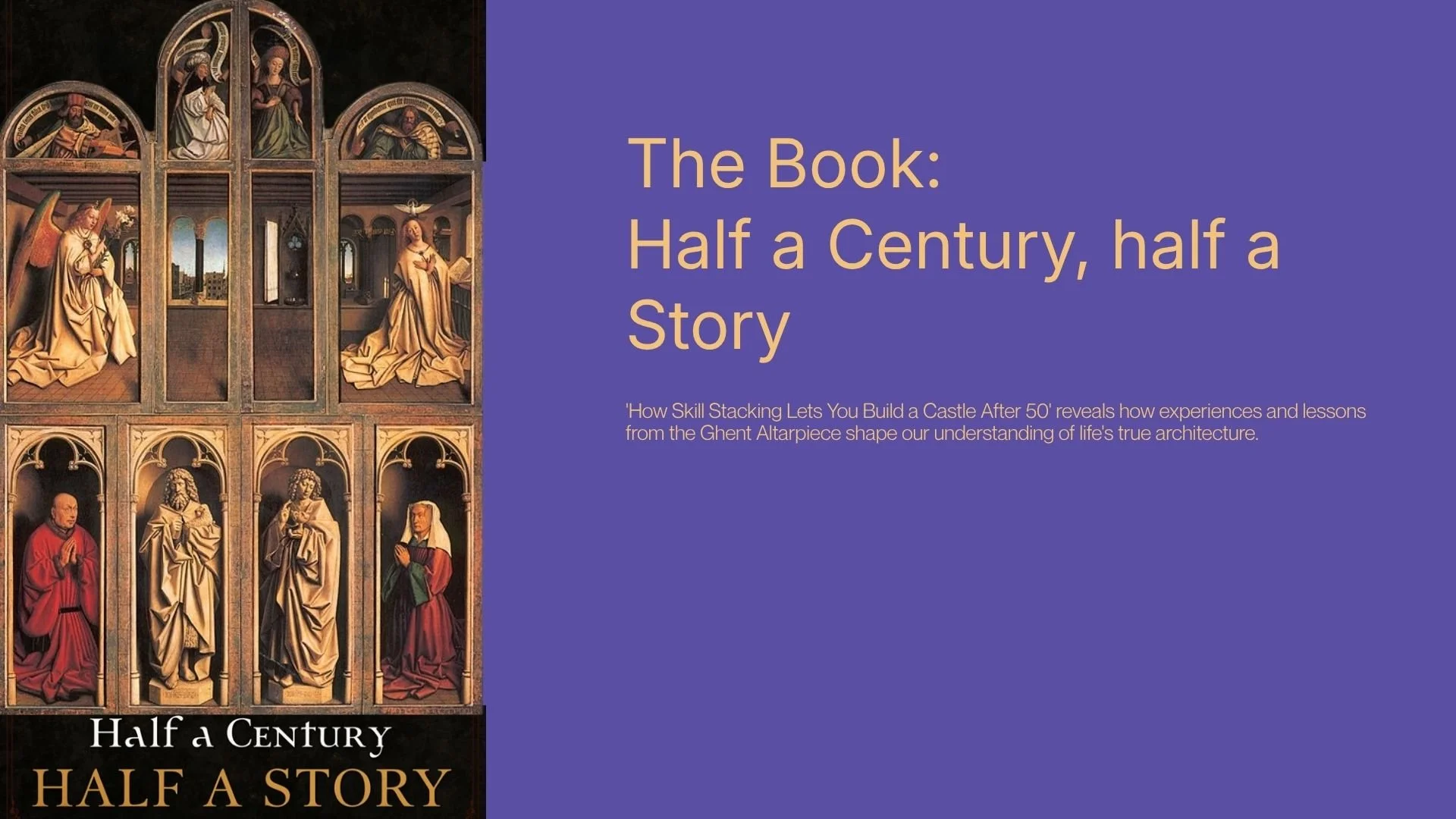
"The second half of life is not the slow decline. It is the second build."
The Premise
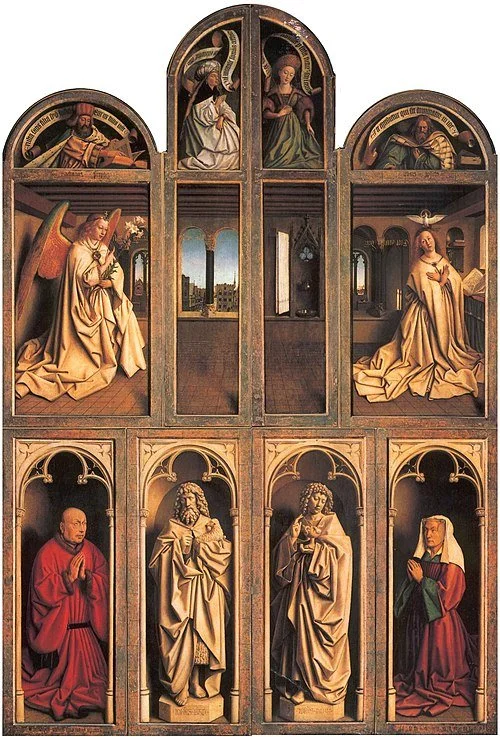
The Ghent Altarpiece took the Van Eyck brothers years to complete. From the outside, when the panels are closed, you see grisaille — figures painted only in shades of grey. It's beautiful in its own restrained way. It's also, quite literally, the closed version of the work.
Open the panels, and the color arrives. The full vision — the one the painting was always building toward — only appears once you do the opening.
Most of us live the grisaille version of our own lives. Grey, capable, respectable — a life that works, painted in the tones everyone expects. We close the panels somewhere in our twenties or thirties and stop looking behind them, mistaking the closed version for the finished one.
Half a Century, Half a Story is about what happens at fifty, when you finally open them.
What’s Inside
Who It’s For
The book isn't a memoir dressed up as advice, or advice dressed up as a memoir — it's both, built on frameworks developed from twenty years inside large organizations and the years since spent rebuilding from scratch:
The Four Intelligences — why IQ and EQ alone don't get you through a real reinvention, and why adaptability (AQ) may be the one that decides everything
The Pyramid of Life — a way of seeing your years in four 25-year segments, and what each one is actually for
The Skill Stacking Spiral Staircase — how the skills that carried you through the first half combine to build something new in the second
Practical frameworks for the work itself: a Values Audit, an Adaptability Framework, and frameworks for building community and leaving a legacy that outlasts a career
Anyone close to or over 40 standing at a turning point — whether you're already in the middle of it, or just starting to suspect one is coming.
From the Author’s Note
The Champagne I Never Opened
The call came on a Monday morning.
I was on holiday — that last week of September 2019 — the kind of week off that is supposed to feel like freedom but mostly feels like the world pressing pause while you wait to find out who you are about to become. The president of the division called. He told me I was the top candidate. He told me the board approval was a formality. He told me to put a bottle of champagne in the fridge.
Not yet, he said. But soon.
I thanked him. I put down the phone. And then I burst into tears.
Not tears of relief. Not tears of joy. Something else entirely — something that came from a place I did not yet have the language for. I cried on and off for the rest of that week. I could not explain it to myself, let alone to anyone else. This was the goal. This was what fifteen years of careful, deliberate, relentless development had been pointing toward. High potential. Developing. Ready now. I had earned every word of that progression. My direct reports believed in me. The people who worked with me believed in me. The president of the division believed in me.
The only person who no longer believed in the destination was me.
On the Monday I returned to work, I walked into the office and declined the position.